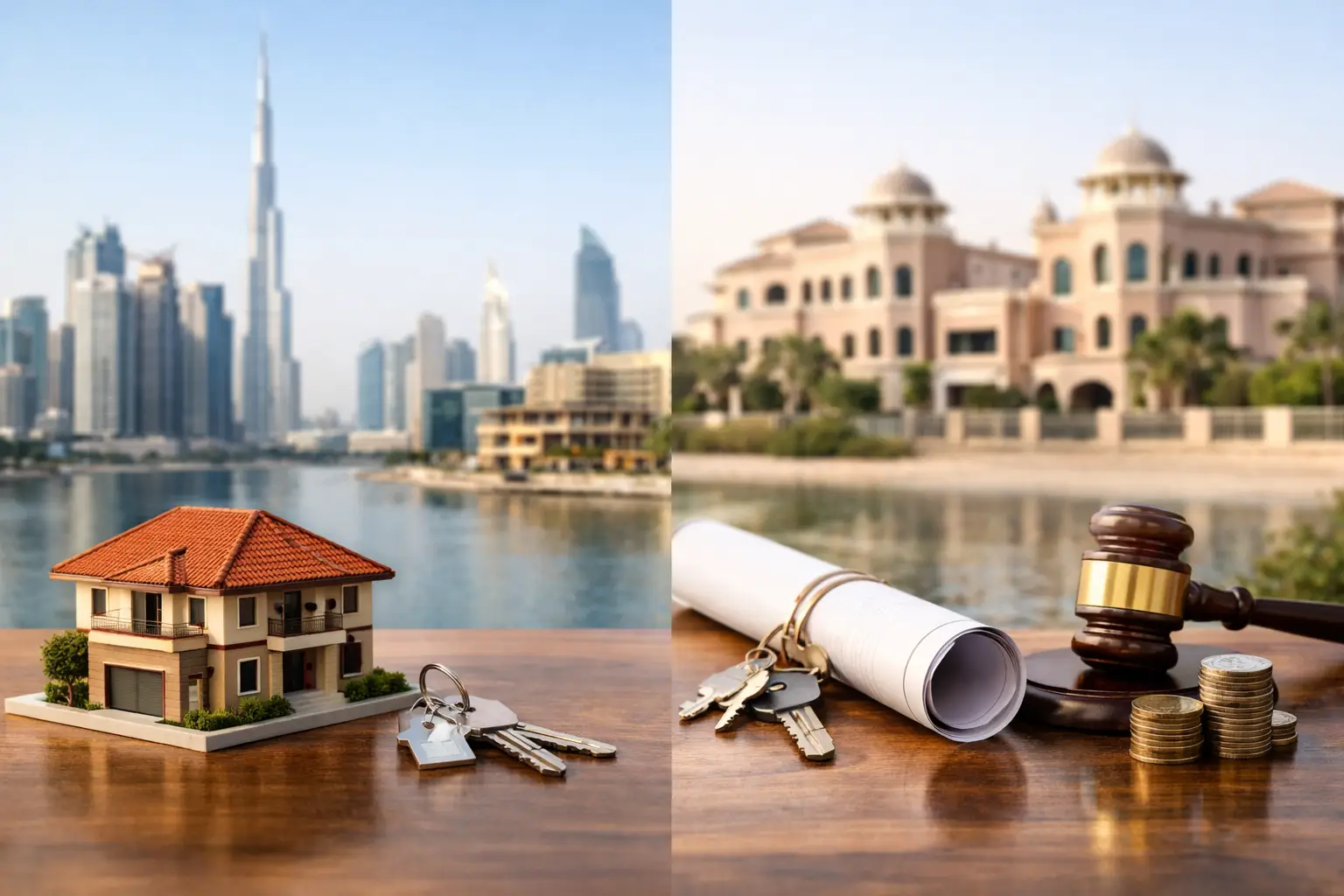
A high-floor apartment in Business Bay and a villa in a master-planned community can look equally compelling on a listing page. The ownership structure behind them can shape your exit options, financing, rental strategy, and long-term family plans. Understanding freehold versus leasehold Dubai properties before making an offer helps you evaluate more than the view, amenities, or launch price.
For international buyers especially, Dubai offers a more accessible ownership market than many global cities. Yet the right choice is not automatically freehold. A leasehold property in a strong location, purchased at the right price and with favorable terms, can still serve a clear lifestyle or investment objective. The decision should follow the asset, your holding period, and the role that property will play in your wider portfolio.
Freehold versus leasehold Dubai properties: the practical difference
A freehold property gives the buyer ownership of the unit, villa, or plot and, where applicable, an ownership interest in the land on which it sits. Once the transaction is registered, the owner receives a title deed through the Dubai Land Department. Freehold ownership is generally permanent and can be sold, leased, gifted, or inherited, subject to applicable laws and community regulations.
Leasehold ownership gives the buyer the right to use and occupy a property for a defined period under a lease arrangement. In Dubai, terms may extend for decades and can reach up to 99 years in certain cases. The land itself remains owned by the freeholder. At the end of the lease, rights are governed by the contract, so the remaining lease term is a central part of the asset’s value.
Dubai also uses related legal structures, including usufruct and musataha rights. These can grant long-term rights to use a property or develop land, but their terms and obligations differ. Buyers should not treat these labels as interchangeable. The registered agreement and title documentation determine what is actually being purchased.
Why freehold remains the preferred route for many buyers
Freehold is often the more straightforward option for buyers seeking lasting control. It is widely available to eligible foreign buyers in designated areas across Dubai, including many established residential and investment districts. Apartments, villas, townhouses, penthouses, and selected plots may all be offered on a freehold basis, depending on the project and location.
For an owner-occupier, freehold can provide confidence that the home may remain part of the family’s long-term plans. For an investor, it usually offers broader resale appeal because the next buyer is acquiring permanent ownership rather than a diminishing term. This can support liquidity when the time comes to sell, particularly in communities with consistent demand from end users and tenants.
Freehold also provides flexibility. An owner may live in the property, lease it for annual income, renovate it within community and regulatory rules, or sell it when market conditions align with their goals. That flexibility matters when an investor’s circumstances change or when a property moves from a personal residence to an income-producing asset.
However, freehold ownership does not mean costs end after purchase. Owners should account for service charges, maintenance, insurance where applicable, property management, vacancy periods, and capital improvements. In a building with premium amenities, higher recurring fees may be justified by renter demand and stronger positioning, but they still need to be included in a realistic net-yield calculation.
When leasehold can make commercial sense
Leasehold is not a lesser option by definition. It can be attractive when the property sits in a high-demand location, the entry price reflects the remaining lease term, and the buyer has a defined timeline. A professional relocating to Dubai for several years may prioritize lifestyle, access to business districts, and convenience over perpetual ownership. A company may also find long-term occupancy rights suitable for operational needs.
The key is to look beyond the headline price. A leasehold unit may appear more affordable than an equivalent freehold property, but its value can be affected as the unexpired term shortens. A buyer considering a 20-year holding period should assess the lease duration very differently from someone planning to sell within five years.
Financing deserves close attention. Lenders may apply different criteria to leasehold assets, including requirements around the remaining term. This can affect your own borrowing options and the size of the future buyer pool when you sell. Cash buyers may be less constrained, but resale demand still matters.
Lease terms can also set out obligations that are easy to overlook during a fast-moving transaction. These may cover renewal provisions, maintenance responsibilities, permitted use, assignment rights, subleasing, improvement approvals, and end-of-term conditions. A well-priced leasehold opportunity becomes a poor investment if the contractual restrictions conflict with your intended use.
Location and property type change the answer
Dubai is not one uniform market. A freehold studio in Jumeirah Village Circle may suit an investor pursuing accessible entry pricing and broad tenant demand. A freehold apartment in Business Bay may be positioned around connectivity, corporate tenants, and a more central lifestyle. A townhouse can appeal to families who value space, schools, and community amenities, while an office or retail unit requires a separate assessment of commercial demand, lease covenants, and operating costs.
Off-plan buyers should take an especially disciplined view. Confirm the project’s ownership structure, the developer’s contractual documents, escrow arrangements, anticipated service charges, handover schedule, and the property’s eventual competitive position. A flexible payment plan can improve cash-flow planning, but it does not replace analysis of supply, rental demand, and future resale value.
For both freehold and leasehold, the strongest purchase is rarely the cheapest unit available. It is the asset whose location, layout, quality, community profile, and ownership terms align with measurable demand. Two apartments with the same bedroom count and square footage can perform very differently if one has better access, a stronger view, lower competing supply, or a more practical floor plan.
Questions to answer before you commit
Start with your intended holding period. If you want a property that can remain in the family, transfer through inheritance, or stay in a portfolio indefinitely, freehold will often be the natural fit. If you are buying for a defined occupancy period, a leasehold asset may be worth considering if the price and contract are favorable.
Next, test the income case. Do not base a purchase solely on an advertised gross yield. Estimate expected rent, likely occupancy, furnishing costs if relevant, service charges, management fees, maintenance reserves, and financing costs. The result is a more useful view of net income and helps determine whether the property can support your return target.
Then review the exit strategy. Who is the likely future buyer: an end user, a local investor, an overseas investor, or a corporate occupier? How will the remaining lease term affect that buyer’s decision? In a freehold purchase, consider whether the community has enough enduring demand to protect liquidity as new supply reaches the market.
Finally, verify the legal position before funds are committed. Review the title deed or registered ownership documents, sale and purchase agreement, community rules, payment schedule, service-charge history, and any restrictions affecting leasing or resale. For leasehold, pay particular attention to the exact expiry date, renewal rights, and transfer conditions. Independent legal and financial advice can be appropriate for complex structures or high-value acquisitions.
Choosing with confidence
A property purchase in Dubai should work on two levels: it should suit the way you want to live or operate today, and it should make financial sense when you measure its future options. Freehold often provides the strongest long-term control and resale flexibility. Leasehold can be a focused, value-led decision when the location, price, and contract support a clearly defined plan.
Brook Real Estate approaches that choice as an asset decision, not just a property search. A clear review of ownership rights, projected rental performance, carrying costs, and buyer demand helps turn an attractive listing into a purchase you can hold with confidence.